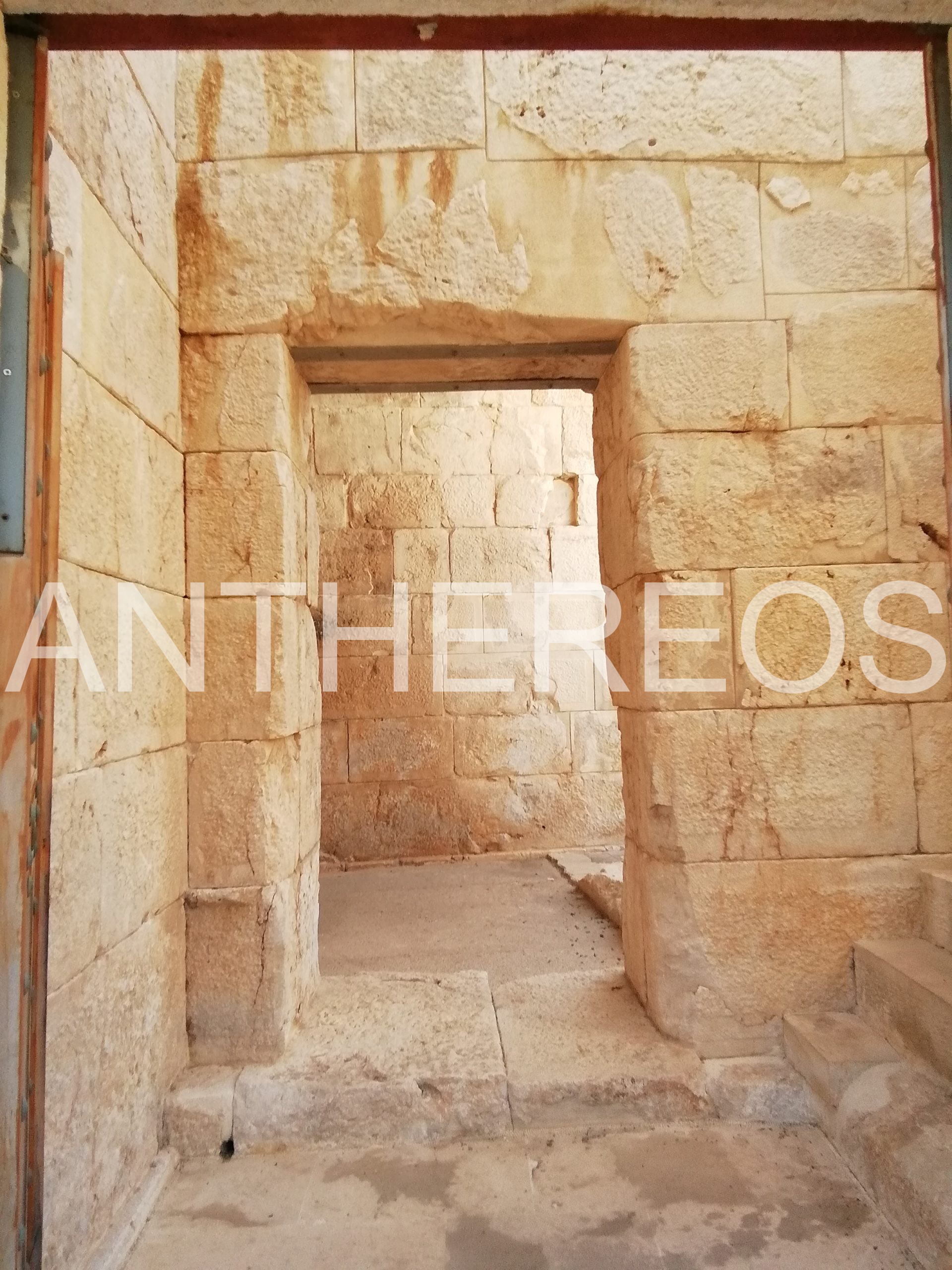
The story behind the Anthereos Leptis Magna collection
Buried to Be Preserved
Some cities are destroyed by neglect. Leptis Magna was preserved by it.
Founded by Phoenician traders around the 7th century BCE on the coast of what is now Libya, the city grew wealthy on trade routes linking sub-Saharan Africa to the Mediterranean. It reached its absolute peak in 193 CE, when a native son, Lucius Septimius Severus, became emperor of Rome and poured imperial resources into transforming his birthplace into one of the most beautiful cities in the empire — a new forum, a colonnaded street, a triumphal arch, and baths decorated with mosaics of extraordinary sophistication.
By the mid-4th century, the city’s fortunes had reversed. Trade routes shifted, harbours silted, and Leptis Magna slipped slowly into abandonment. After the Arab conquest of the 7th century, it was left almost entirely alone — and the desert did the rest, burying colonnades and mosaic floors under centuries of drifting sand.
That abandonment turned out to be a gift. Unlike so many Roman cities built over repeatedly by later generations, Leptis Magna was simply left in place — which is precisely why its mosaics, baths, and forums survive today in a state of completeness found almost nowhere else in the Roman world.
Mosaics That Waited in the Dark
The mosaic floors of Leptis Magna — geometric patterns of extraordinary precision, laid tessera by tessera by hands that left no names behind — spent well over a thousand years hidden beneath sand before archaeologists began uncovering them in the 20th century.
What they found was a level of craftsmanship that still humbles modern visitors : intricate patterns radiating from the entrances of bath complexes, floors designed to be walked across barefoot, cool marble and coloured stone arranged with a mathematical confidence that assumed — correctly — that someone, someday, might still be looking.
A Heritage That Refused to Disappear
Leptis Magna has, in more recent history, sat at the edge of instability — a UNESCO World Heritage Site that has weathered decades of political upheaval in the region surrounding it. And yet, remarkably, the site itself has emerged largely unscathed each time, protected as much by its remote position as by international attention to its significance.
There is something quietly defiant in that survival. A city built for permanence by an emperor who never doubted Rome would last forever, saved not by that empire’s strength but by centuries of sand, and then rediscovered by generations willing to dig it back into the light.
At Anthereos, that resilience is exactly what we return to : beauty that outlasted the empire that built it, waiting patiently under the surface for someone to want it again.
穿戴上过去。活出现在。
Leptis Magna inspires several creations in the Anthereos collection.
Inspired by the mosaics of Leptis Magna, Libya, 2nd–3rd century CE
Stephen Rimorini — eternally inspired